
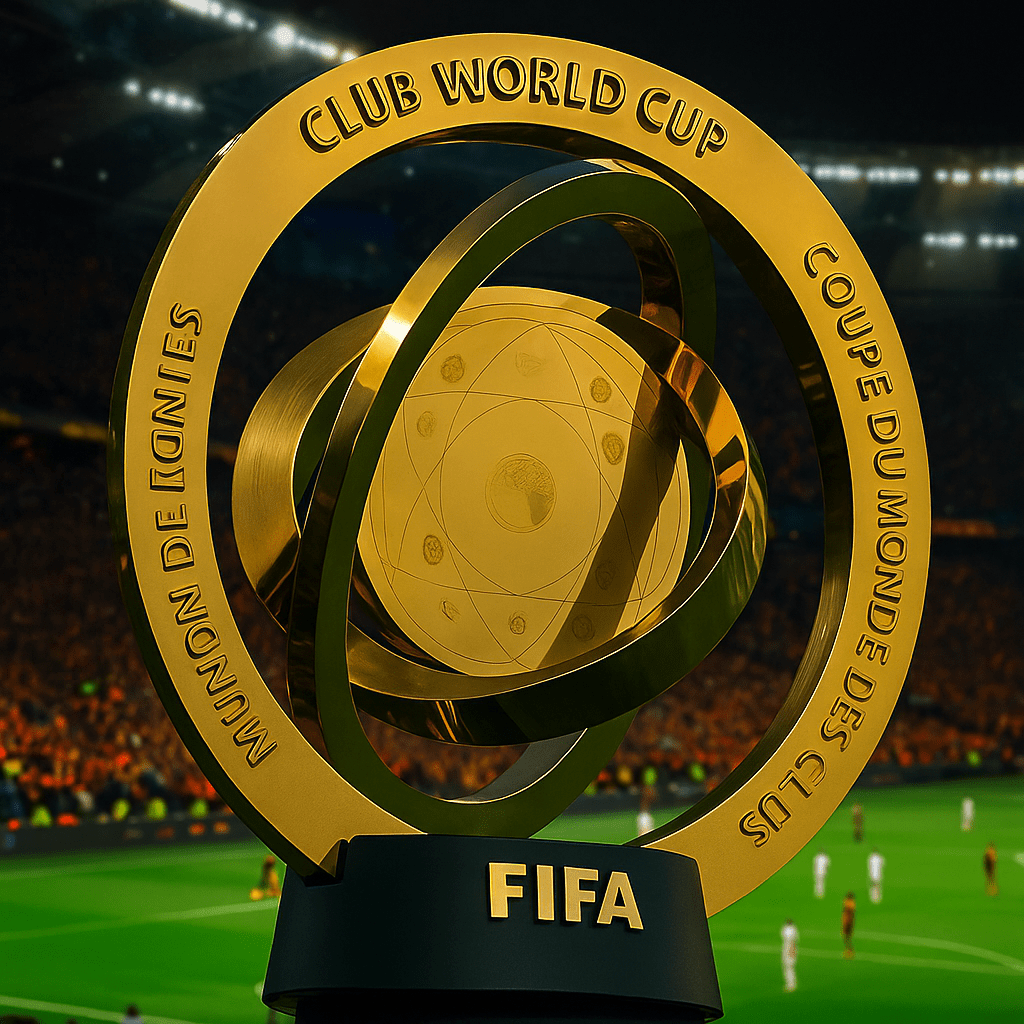
The 2025 FIFA Club World Cup marked the debut of the tournament’s expanded 32-team format. For the first time, the tournament adopted a World Cup–style format, featuring a group stage followed by a knockout phase, bringing together champions and top clubs from all six confederations. Hosted in the United States from June 14 to July 13, the competition spanned 12 stadiums across 11 cities.
Road to the Title
Qualification
The 32 teams qualified through continental championships or ranking-based invitations. Europe sent the most clubs (12), followed by South America (6), Asia (4), Africa (4), North America (5), and Oceania (1). In total, clubs from 20 different countries were represented.
The qualification system varied by confederation based on how many slots each was allocated:
- UEFA and CONMEBOL: places to the winners of their top club competition (UEFA Champions League and Copa Libertadores) from 2021 to 2024, with additional top-performing clubs based on a ranking system from that same four-year period.
- AFC (Asia), CAF (Africa), and CONCACAF (North/Central America): four slots each, all given to the winners of their main continental competitions from 2021 to 2024.
- OFC (Oceania): one slot that was awarded to the highest-ranked club among the region’s continental champions during the 2021–2024 window, based on FIFA’s criteria.
- The host nation (United States): one automatic place, which was awarded later to Inter Miami CF.
If a club won their continental competition more than once between 2021 and 2024, the extra spot was given to another team based on a four-year ranking system. Normally, no more than two clubs from the same nation could qualify, unless more than two clubs from that country had won the continental title, in which case they were all allowed in. These rankings were based on each club’s performance during those four seasons and were developed in consultation with confederations and key stakeholders.
On the Pitch
The group stage brought early drama, with FC Porto and Atlético Madrid failing to reach the Round of 16. Bayern Munich and Chelsea finishing second behind SL Benfica and Flamengo, respectively, was somewhat unexpected. Another notable result includes Botafogo defeating UEFA Champions League winners PSG.
The knockout stage delivered its fair share of surprises, including Al Hilal’s dramatic 4–3 extra-time victory over Manchester City, and Fluminense knocking out UEFA Champions League finalists Inter Milan. PSG, despite a challenging road, cruised to the final with dominant wins over Inter Miami (4–0), Bayern Munich (2–0), and Real Madrid (4–0). Chelsea’s path was convincing, as they eliminated Benfica (4–1), Palmeiras (2–1), and Fluminense (2–0) to set up a clash with the French giants.
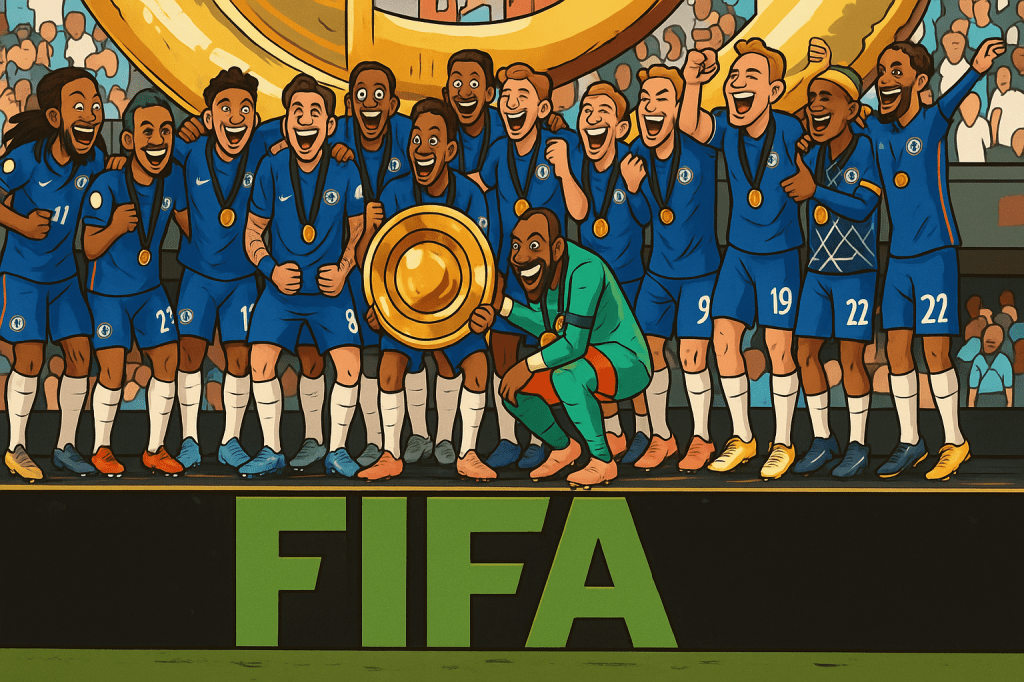
In the final, Chelsea delivered a clinical performance, securing a commanding 3–0 victory over PSG. Cole Palmer starred with a brilliant brace, while João Pedro added the third. Palmer’s standout tournament earned him the Golden Ball, as Chelsea became the first team to win the Club World Cup under its new format.
Scoring Patterns
In this section, we highlight the tournament’s key statistics and trends, featuring visual breakdowns of scoring patterns, continental contributions, and standout individual performances.
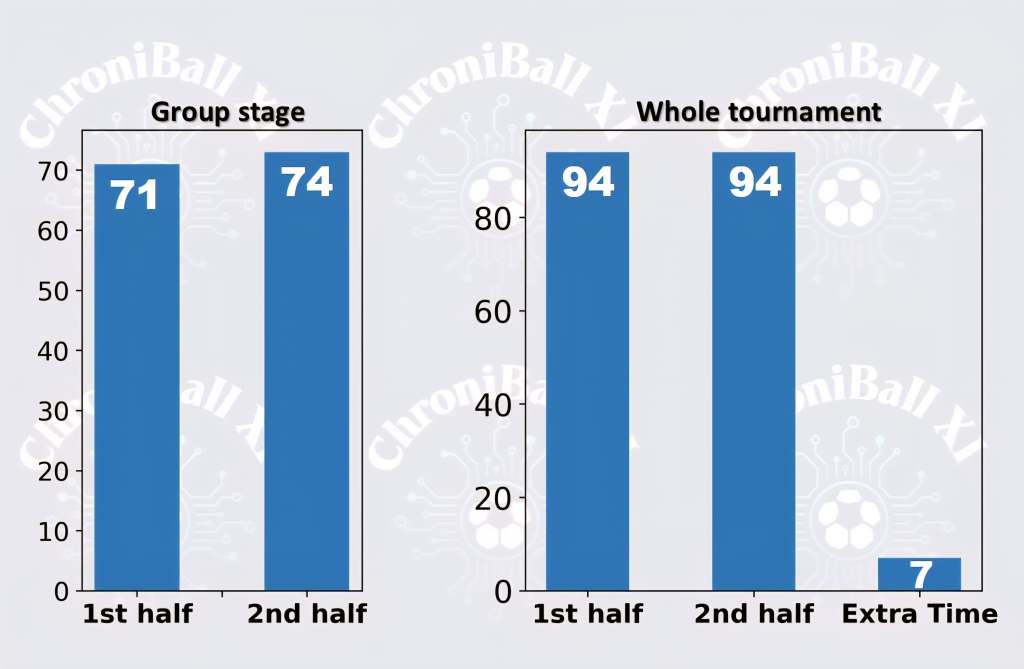
A clear scoring pattern emerged throughout the tournament. After the group stage, nearly half of all goals were scored in each half. By the end of the competition, this balance remained remarkably consistent, with 94 goals scored in both the first and second halves. An additional 3.6% of goals came during extra time.
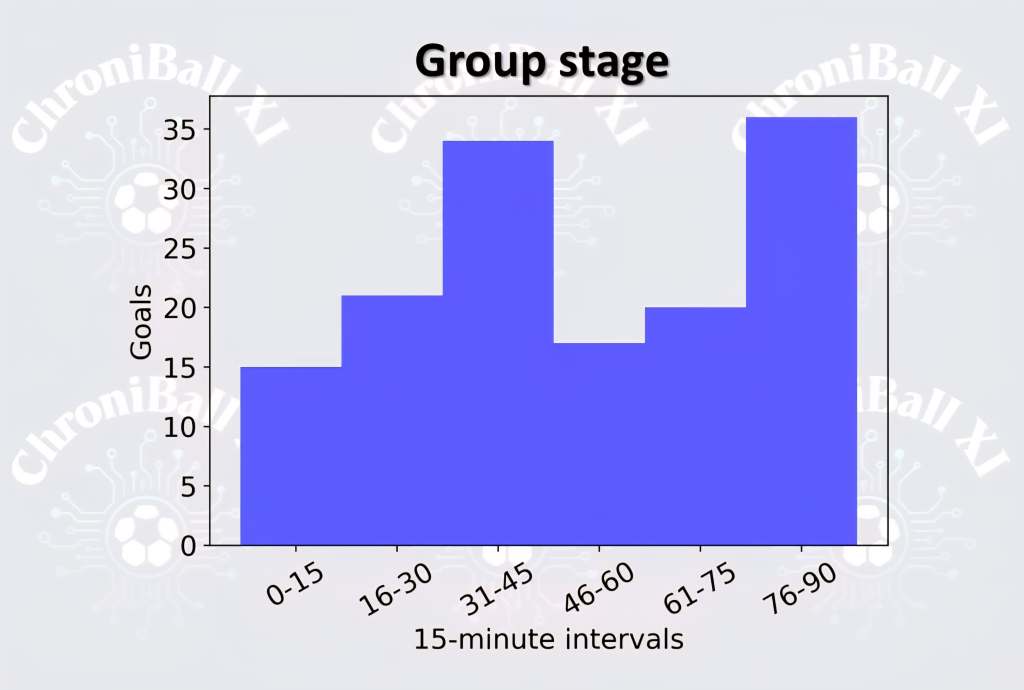
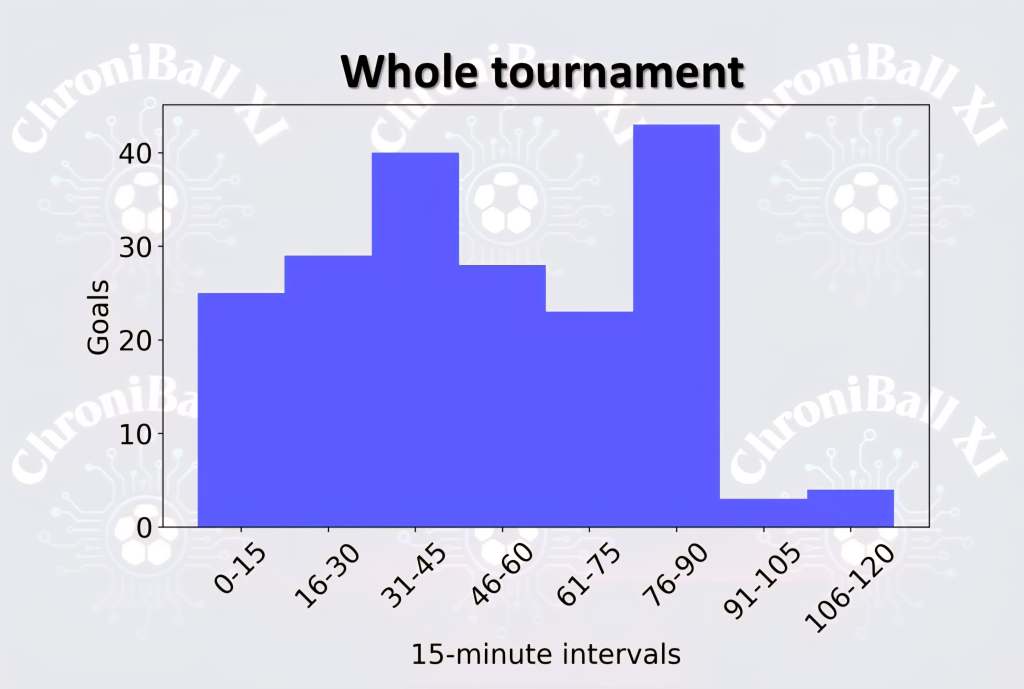
On the other hand, the final 15 minutes of each half proved to be the most action-packed (in both cases), as shown in the graphs above, especially the last quarter-hour of the second half, which produced the highest goal count of 43 goals (entire tournament). Interestingly, the opening 15 minutes of matches were also lively, contributing 12.8% of total goals.
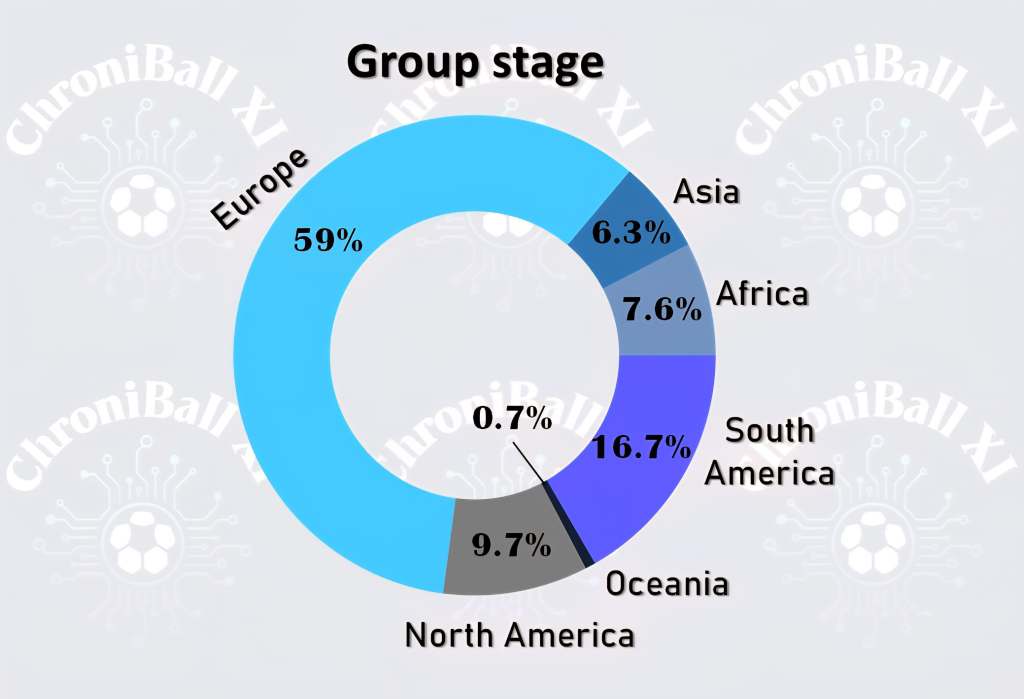
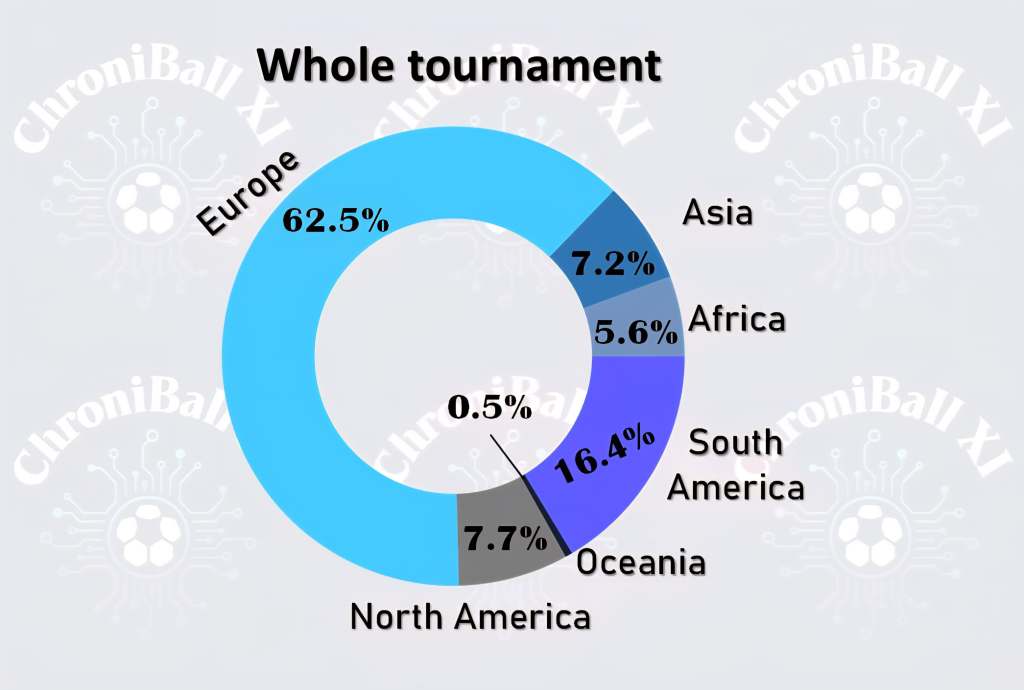
In terms of continental output, European clubs dominated the scoring charts, accounting for 59% of goals after the group stage, and this increased to 62.5% by the tournament’s conclusion. South America followed with a steady contribution of around 16.5%, while Asia edged ahead of Africa and North America after the group stage, largely thanks to Al Hilal’s deep run and strong offensive display.
Individual highlights
Four players finished the tournament with 4 goals: Gonzalo García (Real Madrid), Ángel Di María (Benfica), Serhou Guirassy (Borussia Dortmund), and Marcos Leonardo (Al Hilal).
Chelsea ended as the tournament’s most prolific team with 17 goals, closely followed by Bayern Munich, Paris Saint-Germain, and Manchester City, each scoring 16.
Gianluigi Donnarumma led all goalkeepers with five clean sheets.
In terms of discipline, Auckland City FC is the only team that completed its campaign without receiving a single card.
Every participating team found the net at least once, reflecting a highly competitive and open tournament.
Finally, here are the award winners at the FIFA Club World Cup 2025:
- Best Player of the Tournament: Cole Palmer
- Top Goalscorer: Gonzalo García (his assist to Arda Güler against Pachuca broke the tie)
- Best Young Player: Desire Doué
- Best Goalkeeper: Robert Sánchez
Outside Europe, Brazil Still Leads
Even in a tournament increasingly dominated by European powerhouses, Brazilian clubs remain the most successful and consistent challengers from outside Europe. With multiple titles (2005, 2006, 2012) and regular appearances at the highest level, Brazil continues to carry the flag for South America.
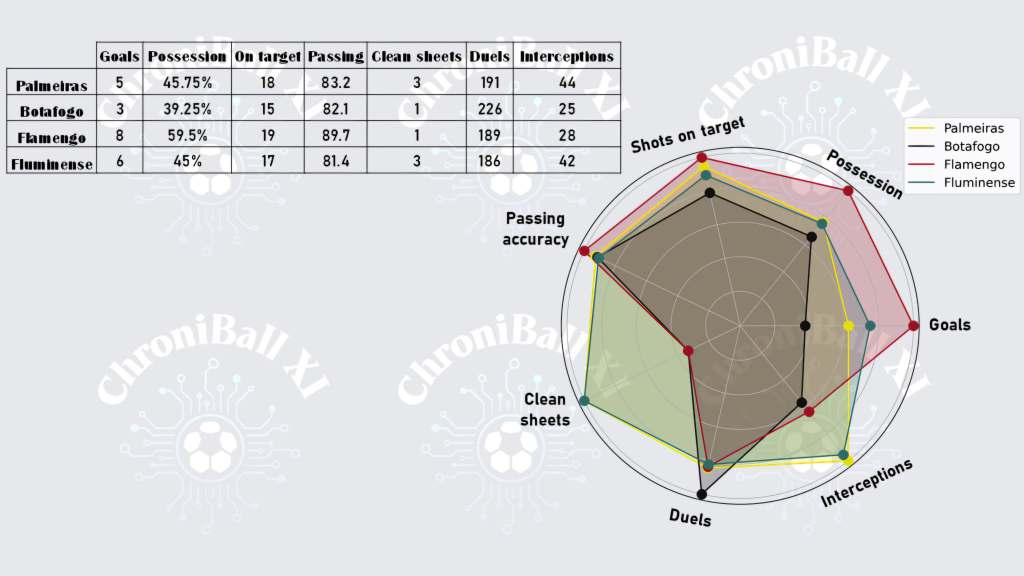
All Brazilian teams reached the knockout stage, with both Palmeiras and Fluminense advancing to the quarter-finals. Fluminense went one step further, continuing their run to the semi-finals. Below is a radar chart comparing the four Brazilian teams based on their performances in the first four matches (up to the Round of 16), allowing for a fair and consistent comparison. A solid showing from a country that continues to deliver on the global stage.
What will be etched in memory?
- Bayern Munich’s 10–0 win over Auckland City set a new tournament record for the largest margin of victory, surpassing the previous 6–1 record by Al Hilal.
- Sergio Ramos, at 39 years and 79 days old, became the oldest goalscorer in the history of the Club World Cup.
- Al Hilal became the first Asian club to defeat a European side in a FIFA competition, beating Manchester City in a historic upset.
- Brazil was the most represented nationality on the pitch, yet no Brazilian player finished as top scorer, either after the group stage or overall.
- The final between Chelsea and Paris Saint-Germain was the first in Club World Cup history to feature two UEFA clubs.
- For the first time since 2012, the UEFA Champions League winner failed to win the Club World Cup. Coincidentally, Chelsea played a role on both occasions, losing as UCL champions in 2012 and defeating the reigning UCL winners in the 2025 final.
- Chelsea’s 3–0 win in the final marked the fourth major final they’ve won by a three-goal margin (1955 Community Shield, 2019 Europa League, 2025 Conference League, 2025 Club World Cup).
- With this victory, Chelsea became the first English club to win multiple Club World Cups.
ChroniBall XI
Where football meets data, stories, and everything in between
Enjoyed this piece? Follow us on X and Tiktok for more insights, visuals, and updates.
 ChroniBall XI
Leave a comment